Welcome to my blog!
Be yourself; Everyone else is already taken.
— Oscar Wilde.
This is the first post on my new blog. I’m just getting this new blog going, so stay tuned for more. Subscribe below to get notified when I post new updates.

A closer look at Writing Studies
Be yourself; Everyone else is already taken.
— Oscar Wilde.
This is the first post on my new blog. I’m just getting this new blog going, so stay tuned for more. Subscribe below to get notified when I post new updates.
When students think about higher education, the inner workings of their school hardly produce much thought. When examining the pedagogical practices of higher education, an understanding of their importance emerges. In the article, “Rethinking Education as the Practice of Freedom: Paulo Freire and the promise of critical pedagogy” Henry Giroux recalls his past conversations with Paulo Freire on critical pedagogy and its place in education. According to Giroux, Freire thought of education as “a project of freedom” as well as political, since it “offered students the conditions for self-reflection, a self-managed life, and particular notions of critical agency”. The importance of critical pedagogy in higher education is clear from this information: without critical thinking, self-reflection, or self-managing skills, a student is less likely to succeed after school. The significance of human agency in higher education is its ability to influence critical and moral judgement. These choices being made not only affect the self, but are influential to the world as well. Freire believed that these “radical elements of democracy” were “worth struggling for” because he understood the importance of a higher education and the risks associated with not teaching critical pedagogy in schools.
Critical pedagogy promotes student to become politically aware of the world around them as well as become a part of their community. In the article, “What Is Critical Digital Pedagogy, and Why Does Higher Ed Need It?” Jeffrey Young interviews director of teaching and learning technologies at the University of Mary Washington, Jesse Strommel, about her views on critical pedagogy in education. Strommel explains the importance of critical pedagogy helps teachers to “think about…who students are, and about the sort of communities that they live in”. She then makes the point that students should not be seen as “bodies in a classroom” but instead viewed as people who “actually engage with the world”. Freire also believed it was important for students to “expand the capacities necessary for human agency” which persuades them to make their own choices and to impose these choices on the world (Giroux). By becoming a part of their community and acknowledging their heritage, critical pedagogy allows students to analyze and challenge the act of domination and the beliefs and practices which dominate them.
Examining Freire’s ideas on critical pedagogy again, I would now agree and disagree with his views on the importance of higher education. Freire rejected the economic model of education, and I agree that education should be free. Sure, the skills I learn will be useful in society and benefit me outside of school, but will they ensure me a job? I think not. Pedagogy does create a deeper understanding of the world around us, but is it not possible to learn these skills ourselves without the assistance of a teacher? Why should I go into debt when I can gather this knowledge myself by conducting research on the internet? While I do agree that being able to think critically is an important tool, I fail to see the importance of spending insane amounts of money on an education that does not guarantee me a job in the future. After many job interviews I can assure anyone that they care little of where I have attended school, or what my pursuits are, but on what skills and knowledge I can provide to the company. While it is possible to learn these skills in school, a lot of these skills require my own practice and research outside of the classroom. Confidence is one of the most important tools I have used when applying for a job, and they do not teach that to you in schools. Freire believed that it was important for students to be able to make their own choices in the world and contribute to their society, but the world has lost sight of this importance and I feel it no longer an important aspect of higher education. Most of these students are not attending for the promised knowledge they will receive or to make a difference in their community, but to get a better paycheck than what those without a diploma are offered. Most of us, especially myself, will remain in debt for the rest of our lives because we will continue to work in jobs that barely pay our bills. So, I ask, is higher education truly worth it?
Works Cited
https://journals.sagepub.com/doi/pdf/10.2304/pfie.2010.8.6.715
Writing is an endless road trip. You start off with a destination in mind, but you can end up taking many different winding roads and you can sometimes get lost. Reading through the article about metaphors by Lakoff and Johnson, I was able to make connections to my own metaphor. I found it interesting how they mentioned how easy it is to get lost in the meaning of the metaphor. People interpret the meaning of sentences and words in their own way, and how the person interprets this context depends on their political and social attitudes. When another person reads my metaphor above, they will determine their own interpretation of the meaning. Perhaps they will connect the idea of a road trip to their own memories and experiences of what a road trip is. Maybe this person’s memories of a road trip are different from mine, and they will associate the metaphor with negative imagery instead of positive imagery. As a writer, I see this connection between metaphors and how they can help us gain a better understanding of context within our lives. Breaking apart my metaphor, I examined the word “endless” and how it describes my feelings on the writing process. Writing can seem endless to me, especially at the beginning of the journey. This is where the concept of “road trip” comes into play with my metaphor because while the journey can seem endless, you can be influenced positively along the way. Although there are many roads you can choose when writing, it is easy to come across a roadblock or need to stop at a rest area. This further connects the metaphorical concept of writing as an endless road trip.
After reading Lakoff and Johnson’s article, it became apparent to me how many metaphors surround us in our daily activities and thoughts. I agree that many people do not think about the metaphorical nature of their actions and thoughts because they are usually automatic and embedded in routine. I believe the metaphor of a road trip represents the process where we have time to think about metaphors and examine elements in our lives as we stare ahead at an open and endless road. My writing process is similar, where I am taking time to think about how I construct my sentences and my choice in words. I often ask myself “How will the reader receive what I write?” Even more interesting is how Lakoff and Johnson make the point that the metaphors we use are containers for meanings. These words and sentences have their own meanings and are independent of the metaphor, yet it is easier to use metaphors to create a better understanding of the context. At the same time, I agree that there are times where a metaphor does not fit in the context or give additional meaning to it. I believe this is why it is important to contemplate the metaphors we use in writing because it is easy for the reader to become confused with our attempt to provide meaning through our writing. Again, I can connect to my metaphor when I feel lost in the writing process and even if I am looking at a map (outline) to where I am going with my writing, I need to focus on the meaning behind the message I want to convey to the reader. This thought process helps me to continue in my writing and when I reach a road block, it provides a detour for my thoughts. While my journey with writing is endless, it is one where I have discovered new places and parts of myself along the various trips I have made throughout life. I think this represents how the journey to bettering ourselves is never over, and that there are always improvements we can make within our writing.

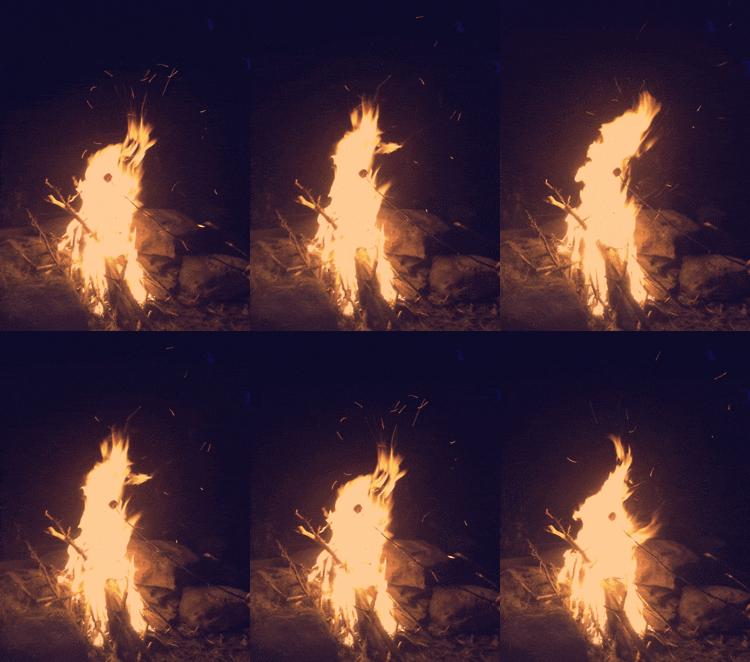
Recently I read the creative nonfiction “Dead and Dying Light” by Lena Crown and became inspired to write my own story. Crown used the form of a braided essay to weave her memories of making s’mores with the larger speculation of human existence and our placement in the Universe. The white space between paragraphs separates her ideas and allowed for her to start a new setting and thought process. She provided outside data relating to the temperature of a star, and was able to tie this into roasting a marshmallow. The way she associates a simple memory of cooking s’mores over a fire with contemplating existence and the life of stars established an emotional connection with the reader. I envisioned my own memories of roasting s’mores and of looking up at the stars, and related these memories to the author’s story. The aesthetic of Crown’s work drew me in with a cozy feeling and yet it contained the deeper message of considering life outside of one’s own. I want to incorporate this feeling into my writing, where I am able to tie a memory in with a more complex concept that the reader can make a relate to. This creative nonfiction piece inspired me to not only think about the memories and message I want to write about, but the literary devices I can use to strengthen and develop it further.
When examining the literary devices Crown used in her writing, there are many that drew my attention as a reader. Throughout her story she uses similes like “…the dark presses us between its pages like violets, daffodils, sprigs of baby’s breath” to convey how the dark affected her emotionally. One of the metaphors she uses, “…the Earth is a giant ball of sugar crisping slowly, jelly at its core” to demonstrate the vulnerable life of the planet and how time continues on as stars come into existence and then die. The imagery throughout the story really sets the scene and allows the reader to connect on a deeper level through the details. The imagery constructed from “…flocked to a house with parents asleep upstairs and fresh-squeezed orange juice in the fridge and a child’s drawing of a black dog framed on the wall facing the kitchen” immediately brings a scene to mind with its descriptive language. The orange flames engulfing the marshmallow represent the temperature of a star, and compares turning the insides of the marshmallow into jelly with that of a dying star. Crown gives the flames tongues which lick, using the literary device of personification to make a connection with the reader. Another device I noticed in her writing is the usage of a flashback memory to provide additional background information to the story. The flashback sent me to another part of the story and weaved the additional material into the story so it flowed naturally. I want to integrate all of these literary devices in my own story to create my own important message. By including these devices, I believe I will be successful in creating a message that inspires readers to contemplate an issue that perhaps they don’t think about often but can relate to.

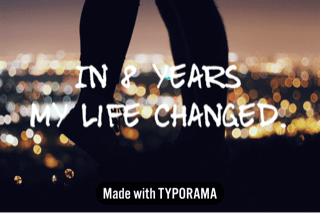
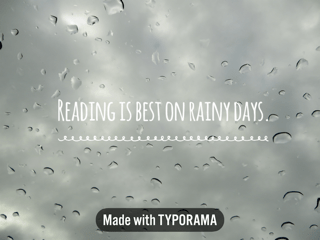
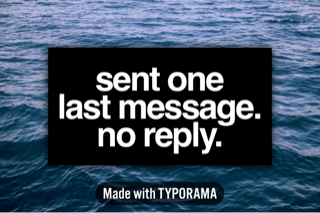

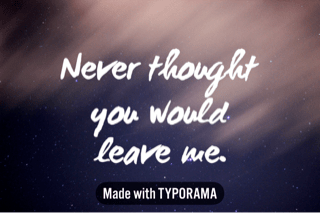
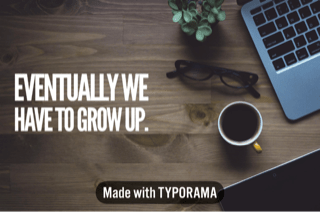
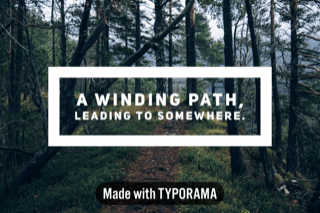
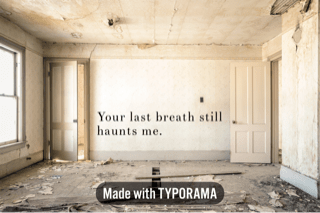

When writing flash fiction, limiting myself to six words is fun and challenging. It made me realize how many words we use to convey even the simplest of messages. With six words I can tell a small story about myself unlike other writing. My word choice I felt represented my feelings and experiences in life well. I think the challenge of writing flash fiction is being able to evoke an emotional reaction from the reader as well. I want to make this connection with the reader and this inspired my process of writing flash fiction. The downside to writing flash fiction is how the six words can feel restricting, and it makes the process of formulating a message complicated. I enjoy writing the most when there are no word restrictions and I can better convey my message. I feel that while a six word message can have a powerful effect on the reader, so choosing the six words carefully is crucial in writing successful flash fiction.

When I compare my writing in an analog space to a digital space, I notice many interesting differences. Having to shift from an analog writing space to a digital writing space changed my writing process. Since I was young I have used pencil and paper to write instead of a computer. In school, it was common for me to write my assignments by hand, and so I grew up being comfortable with that form of writing. When I switched to a digital writing space I had difficulty adjusting to a new method of writing. Before I had just picked up a pencil and began my writing, but with digital writing I had to learn how to use a new writing tool. My writing process was slow, as I had to search for each letter to type my message, and I struggled with understanding why the word processor was underlining my words in red and blue. Writing with a pencil and paper, I was never as concerned with grammar and spelling, but writing digitally changed that into a part of my process. Using a pencil and paper, I mapped out my ideas first, which allowed me to organize the structure of my writing. In the digital writing space, I organized my writing differently according to the MLA or APA requirements and mapped out my ideas in a list that included notes on the topic being written about. Although I have been writing longer on paper, I have adjusted my writing process over the years where I am no longer uncomfortable using digital tools to write.
Even though there are many differences between analog and digital writing, there are also many affordances and constraints that attribute to my writing process. In digital writing, I use the screen as my visual space and the keyboard as an affordance that allows me to type faster than writing by hand. Despite my increased writing speed, a constant distraction exists while using a digital space to write. This constraint in creativity can slow my writing thought process and contribute to writer’s block. While I am able to better relay my ideas through an analog method, the digital writing space allows me to express myself more visually. For instance, creating this blog I was able to choose a design and layout that fit my writing style. This affordance brings greater intrigue to my writing and grabs the reader’s attention more than a plain piece of paper. On my blog I also incorporate pictures, videos, and GIFs to further interact and connect with my viewers. Adding these affordances inspires my creativity in the digital space more than in the analog space but there is still a constraint involved. Learning to use the website and creating my own blog was a constraint since I had never accomplished it. It took me a while to figure out how to design my blog and what affordances I could use to make my blog more interesting to readers. In analog writing I was less worried about the readers and I believe the digital affordances of design I have used on my blog have changed the way my message reaches viewers. I have the ability to share a link to my blog with others, while the constraint of analog writing only allowed me to hand it to another person to read. I can also include a link to my resources at the bottom of the blog post, allowing for my readers to check my sources and further educate themselves on the subject. Examining these digital tools, I’ve realized my writing has improved due to my increased usage and knowledge of these tools. Since analog writing doesn’t include these helpful tools, I struggle to get my thoughts across in the same manner. The switch from analog to digital was a difficult switch, but it was one that I needed to make in order to strengthen my writing process over time.
How is language acquired? Below is the link to my podcast that discusses the theories behind language acquisition development further.

Sources
https://blogs.scientificamerican.com/observations/how-language-shapes-the-brain/
https://www.verywellmind.com/what-is-sociocultural-theory-2795088
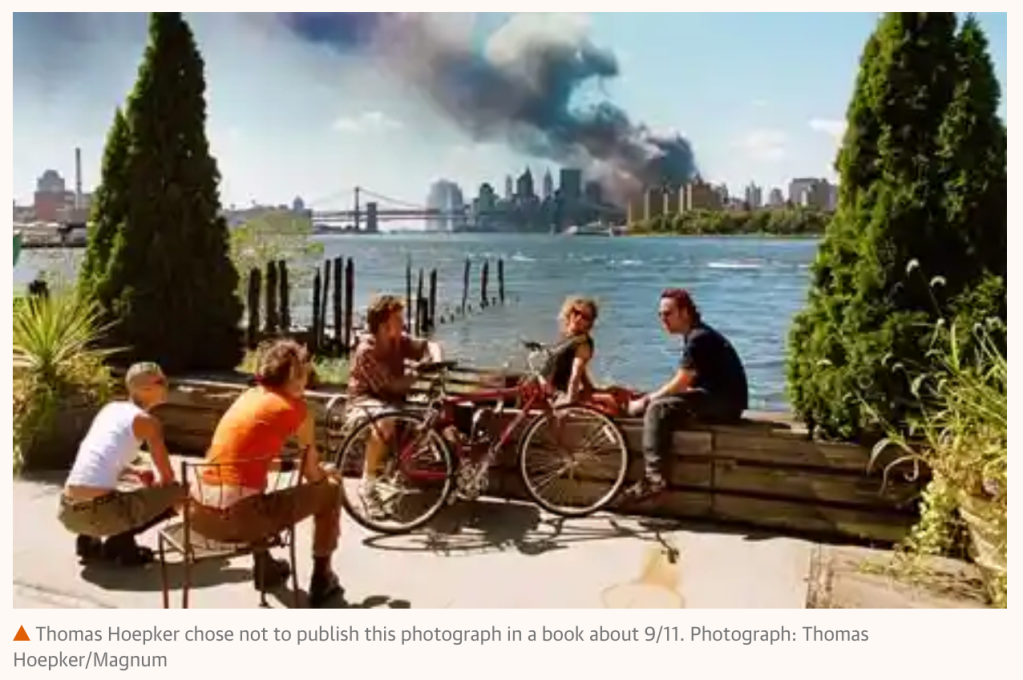
When looking at Hoepker’s image, the first thing that stood out to me was the thick smoke billowing from the buildings. Next, the group of people in the foreground are brought into view, all seemingly in relaxed poses. Last, the bright and sunny day is noted against the contrast of the dark background. What I interpreted the meaning of this photo to be is a metaphor for how people are focused on themselves and are ignorant of the events happening in the world around them. After reading the article, The Meaning of 9/11’s Most Controversial Photo by Jonathan Jones, I realized the photo was actually related to the tragic event that happened many years ago. Examining the photo, it is evident that the photographer wanted to capture a moment that was unique yet horrifying. The burning buildings as well as the group of smiling, seemingly happy people are the focal points of the picture, which conveys a message of indifference to the tragedy behind them since they are safe from harm’s way. It is also important to ponder on the fact that the photographer did not release this photo until years after it was taken. At the time, the photographer did not feel the picture was appropriate for the tragic event and put it in a box of rejects. Frank Rich, a member of the New York Times, describes the people in the picture as being carefree and a representation of how America moves on from events quickly. Two of the group members in the picture were also contacted, and they gave a different account from what the photo exhibited. Instead, they claimed they had already witnessed the buildings exploding from his apartment, and had merely come closer to the waterfront in a state of shock and disbelief. They went on to explain how this photo is actually a group of strangers comforting one another on the catastrophe behind them, not relaxing in the sunshine. There is only one image, but these varying perspectives tell completely different stories.
The multiple perspectives regarding this photo support Plato’s concern with imagery speaking the truth. It is difficult for us as the viewers to dig deeper into the context of imagery, and usually we are content with scanning the image and coming to our own conclusions instead of conducting further research. While the photographer claims he took the picture quickly and while in the midst of trying to get closer to the tragedy, just looking at the photo does not convey that message. This photo does not tell the truth of the situation, but instead creates an alternative narrative to the “reader” to be interpreted. This picture also supports Plato’s idea of iconophobia and how there are many perspectives on what the “truth” of the image actually is. Our society is heavily overrun by imagery, and there is not always context attached to these pictures. This encourages inaccurate analyzation of the what the truth behind an image is, and can also lead to the mass circulation of misinformation. Since the internet is where most people gather their information and anyone can post information to the internet, it is understandable why deception is a common occurrence. Plato’s concerns are relevant because some of these cases can turn dangerous, when the misinterpreted “truth” leads to great misunderstandings. While the 9/11 photo does not create a deadly misunderstanding, it still does not speak the truth. This is why conducting research should be motivated in our culture. By doing this we can not only contest the rise of misinformation, but encourage the proper thought process behind careful analyzation and interpretation.
Works Cited
https://www.theguardian.com/commentisfree/2011/sep/02/911-photo-thomas-hoepker-meaning
https://slate.com/culture/2006/09/frank-rich-is-so-wrong-about-that-9-11-photograph.html
https://slate.com/culture/2006/09/i-took-that-9-11-photo-frank-rich-wrote-about.html
What starts a writer’s journey and influences their subject material? One of the most interesting parts of the writing process is how a writer first gains interest in writing. Another interesting component to add to this is the way a writer’s interest in subject matter also develops. For instance, R.L. Stine recalls being a shy boy who enjoyed creating magazines on his typewriter and handing them out to his friends at school. As a kid, Stine was scared of many things, and so it inspired him to start writing horror stories for children. Since his audience was younger, Stine revealed his rule for writing these stories: “You want to creep them out a little bit, but you don’t really want to terrify them.” Famous writers are not the only ones who have interesting childhood stories regarding writing. Jeffery Delviscio, a senior producer at the NY Times describes how “newspapers were nurture at an early age for me.” Delviscio’s father worked as a writer and editor for a newspaper and would constantly come home smudged with ink and smelling of newspaper. This eventually led to Delviscio’s own career as a journalist for a newspaper company, except his ink smudges were metaphorical. Delviscio recalls his early memories of writing and also relates it to the psychology behind why he started to write. Analyzing my story along with these other writer’s stories, I realized how influential and important childhood is to developing an interest in writing for later on in life.

When examining what inspires writers to start writing, I noticed that I can connect with these narratives as well. My first experience with writing started when I was young and found an interest in reading. Since I enjoyed reading so much, I then became interested in telling my own stories. My parent bought me a computer game that allowed me to write my own stories and I was able to bring them to life with illustration too. My parents encouraged my writer’s enthusiasm further by telling me how much they loved to read the stories I wrote. By the time I was in middle school, I had joined a reading and writing club, where I would read books and summarize them. I received encouragement from my English teacher at the time, who insisted I had a way with words and should pursue a writing career. English classes in high school allowed me to construct a stronger writing style and I made me realize how much I enjoyed putting stories together. Before I had written stories for other people, but now I was writing them for myself. After this realization, I started to establish what subjects interested me the most in writing. Technology is one of those subjects that I started to learn about when I was young, but I did not fully start to understand until I was older and in college. Reading various articles on technology, I became aware of my interest in technology and decided that is where I would like to focus my writing. I can now understand how certain figures and experiences in a writer’s life can shape their storytelling and the subject matter that entices them. Without my parents, I would have never been the little girl sitting at her computer writing stories, and I would probably have not evolved my interest in writing about technology. Thinking back, I’m sure that little girl would be excited to learn that she would become a grown woman who is about to obtain her degree in English and is writing her first blog!
When thinking about the writing process now, I not only wonder about subject material, but what the relationship between the reader, writer, and content is? The reader plays an important part in comprehending material, and this depends on many factors such as their own knowledge and experiences. A reader needs to be able to connect with the content, to tie their own background in to the story in order to comprehend the information they are receiving. If a reader is unable to connect with the story, then the writer needs to think about why they are not making this connection. I used to write for myself and my own interests, but as I have progressed through my writing journey, I have come to understand the processes that are critical to writing. Proofreading is a great example of an important writing process. Whenever I read through my work, I find mistakes and sentences that make my work incoherent. Before I would never proofread because I was more concerned about what I was writing than what the reader was trying to comprehend. Creating an outline for the topic you are writing about is another important aspect to the process. Being able to research the topic I am writing about is critical to how I will incorporate information for the reader to comprehend. Since the message can become lost within writing, it is important to make sure the information being provided is understandable and truthful. As a writer, it is my responsibility to make sure the content I am providing is shaped in a way that does not lose the reader’s interest. While I have found a writing process that works for me, I only hope to improve my writing process in the future, as well as the way I connect my content to the reader.
https://www.readingrockets.org/books/interviews/stine/transcript
 Exploring Writing